
Why Choosing the Right Drywall Contractor in 2026 Matters for Your Home
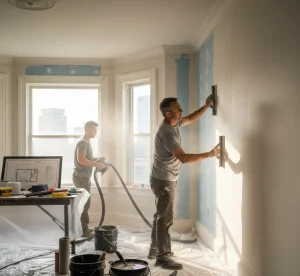
Finding a reliable drywall contractor is often the difference between a seamless, beautiful wall and a renovation nightmare that haunts you for years.
Whether you are building a new addition in Everett or restoring a historic home in Concord, the quality of your interior finishes defines the entire aesthetic of your living space.
In 2026, the construction industry has evolved, and homeowners now face a market filled with varying levels of expertise, especially regarding modern building codes and high-performance materials like mold-resistant panels.
A professional drywall installation involves more than just hanging boards, it requires a deep understanding of structural integrity, moisture barriers, and fire-rated assemblies.
When you start your search, you aren’t just looking for someone with a truck and a drill, you are looking for a skilled tradesperson who understands the nuances of joint compound application and level 5 finishes.
This guide serves as your comprehensive roadmap to vetting professionals, ensuring your investment in your Massachusetts home is protected by high-quality craftsmanship.
Essential Qualifications for a Professional Drywall and Plastering Specialist
Before you sign any contract, you must verify that the service provider holds the necessary credentials to operate legally and safely in the Greater Boston Area. A legitimate drywall business should be transparent about their occupational licenses and liability insurance coverage.
Working with an uninsured individual might seem like a way to save money upfront, but it exposes you to massive financial risks if an accident occurs on your property. In 2026, the standard for excellence includes proof of worker’s compensation and a solid history of compliance with OSHA safety regulations.
Beyond the paperwork, look for a contractor who demonstrates topical authority in both drywall hanging and plastering techniques. In New England, many older homes feature lath and plaster, which requires a specific set of skills that a standard modern drywaller might not possess.
Licensing and Insurance: The Non-Negotiables
Always ask for a copy of the contractor’s current HIC (Home Improvement Contractor) registration and their CSL (Construction Supervisor License) if the project involves structural changes.
These documents ensure the professional is recognized by the state of Massachusetts as a qualified construction entity.
Years of Experience in the Massachusetts Climate
The local weather plays a huge role in how drywall and plaster behave. A contractor who has spent years working through the humid summers and freezing winters of the Middlesex County region will know exactly how to manage expansion and contraction to prevent ceiling cracks and nail pops.
The Homeowner’s Step-by-Step Vetting Process
To ensure you are hiring the best, you need a systematic approach to filtering through the sea of online reviews and local ads. Start by requesting a list of recent projects completed in 2025 and early 2026 that are similar in scope to your own.
A reputable plastering and drywall contractor will be proud to showcase their portfolio. Pay close attention to the details in their photos, specifically looking at the inside corners, the smoothness of the butt joints, and how well they blended the texture with existing surfaces.
Communication is another critical factor during the vetting stage. If a contractor takes days to return a phone call or provides a vague, one-line estimate, it is a significant red flag regarding their future project management and reliability on the job site.
Understanding the Difference Between Level 4 and Level 5 Finishes
Many homeowners don’t realize that there are different “levels” of finish. A Level 4 finish is standard for most residential walls that will be painted with flat or eggshell paint.
However, if you are planning on using high-gloss paint or have lots of natural light hitting a wall, you need a Level 5 finish, which involves a full skim coat of thinning joint compound over the entire surface.
Checking Local References and Reputation
Don’t just rely on digital stars. Ask for three local references you can call. Ask these previous clients about the contractor’s punctuality, their cleanliness during the sanding phase, and whether the final price matched the initial written estimate.
Key Comparison Table: Professional vs. Inexperienced Contractors
| Feature | Professional Contractor (America Plastering) | Inexperienced Handyman |
| Specialization | Expert in Plastering & Drywall | Generalist, “Jack of all trades” |
| Tools | Industrial vacuum sanders, lasers | Basic hand tools, manual sanding |
| Dust Control | High-level HEPA filtration & plastic sheeting | Minimal protection, heavy dust residue |
| Materials | Premium lightweight compounds & Blueboard | Cheapest available store-brand panels |
| Timeline | Strict schedule with drying time built-in | Unpredictable, often rushes the mudding |
| Warranty | Written guarantee on labor and materials | Verbal “handshake” agreement only |
Technical Questions to Ask Your Drywall Service Provider
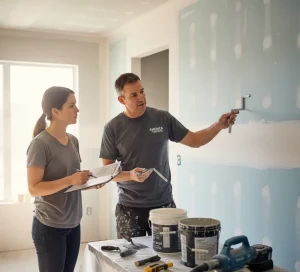
When you meet with a potential drywall installer, use technical terminology to gauge their depth of knowledge. This not only shows you’ve done your homework but also forces the contractor to explain their standard operating procedures.
Ask about their method for corner bead installation. Do they prefer paper-faced metal beads or vinyl beads? Each has its benefits depending on the likelihood of high-traffic impact in that area of your home. A true expert will explain the “why” behind their material choice.
Inquire about their dust mitigation strategy. Drywall sanding is notoriously messy. Professional teams in 2026 use dustless sanding systems that connect directly to high-powered vacuums, keeping your air quality safe and your furniture clean.
What Type of Joint Compound Will Be Used?
There are different types of “mud” for different stages. Setting-type compounds (often called “hot mud”) are used for the first coat to provide strength, while ready-mixed drying compounds are used for the finish coats to allow for easier sanding and a smoother texture.
How Do You Handle Water Damage and Mold?
If your project involves water damage repair, the contractor should discuss the removal of the affected insulation and the use of anti-microbial treatments. Simply covering up a water stain with new drywall is a recipe for future mold growth.
Warning Signs and Red Flags to Avoid
In your quest for the perfect wall and ceiling specialist, be wary of certain behaviors that indicate a lack of professionalism. The most common red flag is a contractor who demands a full payment upfront before any materials have even arrived at your home.
Another warning sign is the refusal to provide a written contract. A professional agreement should detail the scope of work, the specific brands of materials to be used, the payment schedule, and a clear completion date. Without this, you have no legal recourse if the project goes sideways.
Lastly, be cautious of quotes that are significantly lower than all others. Often, these “bargain” prices are achieved by skipping crucial steps, such as not using enough drywall screws, failing to use mesh tape on joints, or applying only one coat of compound instead of the required three.
The “Subcontractor” Surprise
Ask directly if the person you are talking to will be the one doing the work. Some large companies sell the job and then “sub” it out to the lowest bidder. At America Plastering, we believe in direct accountability and consistent quality across every Greater Boston project.
The Value of Specialist Plastering Services in New England
Massachusetts is home to beautiful, historic architecture that often features traditional plasterwork. If you live in an older home, hiring a standard drywall contractor might not be enough. You need someone who understands blueboard and skim coat techniques.
Veneer plastering is a New England specialty. It provides a much harder, more durable surface than standard drywall and is naturally more fire-resistant and sound-dampening. It is the gold standard for high-end renovations in 2026.
Choosing a specialist who can handle both modern drywall and old-world plaster ensures that your home’s character is preserved while its structural performance is modernized. This dual expertise is a hallmark of a high-level interior finisher.
Blueboard vs. Standard Drywall
Blueboard is a specific type of gypsum board with a special treated paper surface designed to bond perfectly with veneer plaster. It is more expensive than regular sheetrock, but the finish is vastly superior in terms of longevity and impact resistance.
Ready to Transform Your Interior Surfaces?
Selecting the right professional is the most important step in your home remodeling journey. By following this checklist, you ensure that your walls will be straight, your ceilings will be smooth, and your home will be treated with the respect it deserves.
At America Plastering, we take pride in our craftsmanship and our commitment to the local community. We don’t just “do drywall”, we build the foundations for your home’s interior beauty using the best materials and techniques available in 2026.
Don’t settle for mediocre results when it comes to the walls you look at every day. Experience the difference that true topical authority and professional dedication can make for your property.
Get a Professional Estimate Today!
Are you ready to start your project with a team you can trust? Contact America Plastering for a detailed consultation and a clear, honest quote.
Call us now: (781) 818-5107
Or visit our Contact Page to send us a message about your specific needs.
Main Service Areas for America Plastering (Drywall Contractor)
If you are looking for a reliable drywall contractor, we serve the following locations with dedicated local expertise:
Frequently Asked Questions About Drywall Projects
How long does a typical drywall installation take?
For a standard-sized room, the process usually takes 3 to 5 days. This includes hanging the boards, applying three coats of joint compound, and allowing for proper drying time between layers before the final sanding.
Can I stay in my house during drywall repair?
Yes, you can usually stay in your home, but it is important to hire a contractor who uses dustless sanding and plastic containment barriers to protect your living areas from fine gypsum dust.
Is it better to repair or replace water-damaged drywall?
If the drywall has sagged or shows signs of mold infestation, replacement is almost always necessary. Small water stains without structural damage can sometimes be treated with a stain-blocking primer and a fresh coat of mud.
Does new drywall increase my home’s resale value?
Absolutely. Smooth, well-finished walls are one of the first things buyers notice. High-quality plastering and drywall work provide a clean canvas that makes the entire home look well-maintained and modern.