
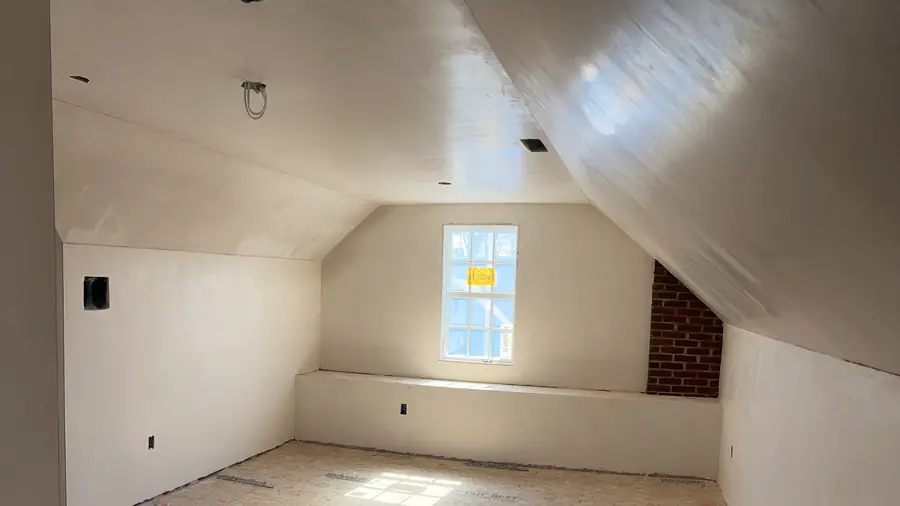
Blueboard and veneer plaster
Veneer Plaster
Veneer plaster over blueboard for homes across Greater Boston, MA: a real plaster surface, harder and smoother than painted drywall, for new rooms, additions, and full renovations.
- Free In-Home Estimates
- Registered MA HIC
- Insured
- Google Guaranteed
- 25+ Years Experience
- References Available
The system
What Veneer Plaster Is and Why Homeowners Choose It
Veneer plaster is a thin coat of real plaster applied over blueboard, a gypsum board made to bond with plaster. The result looks and feels like a traditional plaster wall, but it goes up faster and dries in a fraction of the time. Many New England builders still prefer it for its hard, durable surface.
- A hard surface that resists dents, dings, and scuffs better than drywall
- No taped seams to show through the paint later
- A smooth finish that suits older homes and new ones
- Faster than three-coat plaster, with less waiting between coats
- Good choice for kitchens, hallways, stairwells, and family rooms
Prefer a standard drywall finish for a basement or an attic? Our drywall finishing service covers that. Repairing existing plaster instead? See wall plastering.
Your options
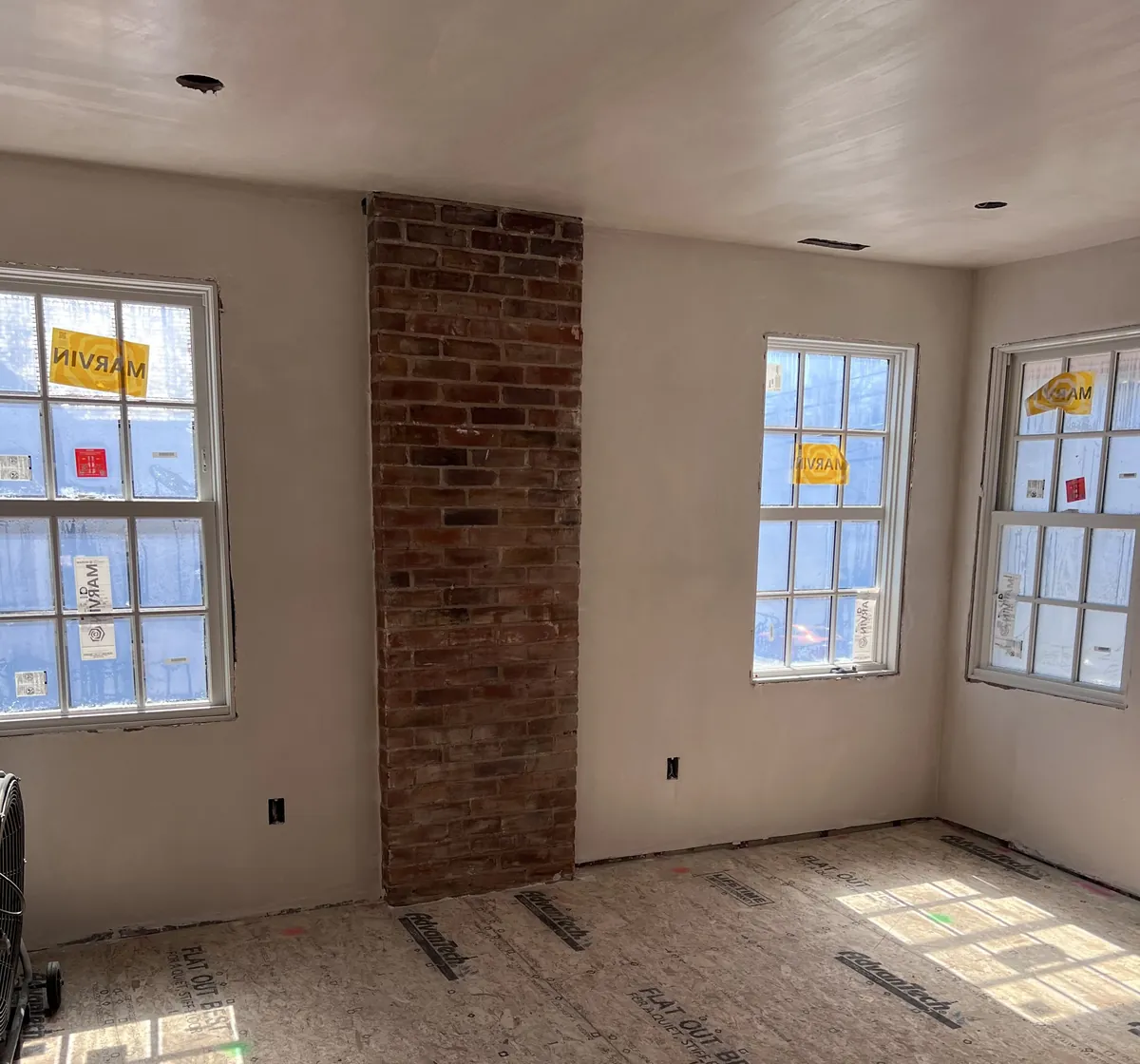
Veneer Plaster Compared With Drywall
Both systems start with gypsum board, so the difference is the surface. Drywall is finished with tape and joint compound at the seams and corners, then sanded. Veneer plaster covers the entire wall with a coat of plaster, which makes the surface harder, more uniform, and less likely to show joints under paint.
- Drywall: lower cost, more sanding, seams finished with compound
- Veneer plaster: harder surface, little sanding, a whole-wall finish
- Both: insulated walls, outlets, and trim install the same way
- Mixed homes: veneer in living areas, drywall in the basement
Our process
How We Install Blueboard and Veneer Plaster
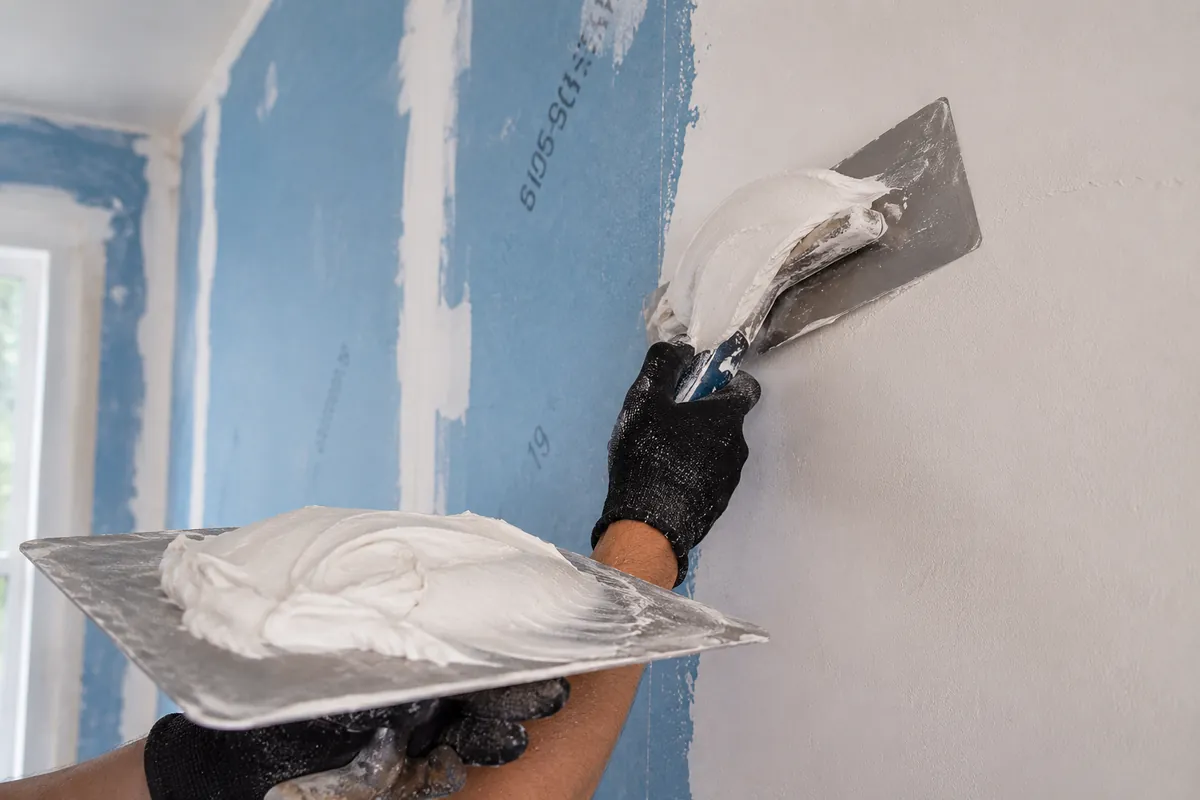
Good veneer plaster depends on the board underneath. We hang blueboard tight to the framing, reinforce the joints and corners, and then apply the plaster in coats while the board is ready to bond. Timing matters with plaster, so the crew works room by room and keeps the edges wet until each wall is done.
- 1
Hang Blueboard
Blueboard is fastened to walls and ceilings with tight joints.
- 2
Reinforce
Joints get tape and corners get bead to keep them straight and strong.
- 3
Base Coat
A base coat of plaster goes on where the system calls for it.
- 4
Finish Coat
The finish coat is troweled smooth and left to set hard.
Warranty
A Plaster Finish Backed by a Written Warranty
Veneer plaster is often part of a larger project, so we coordinate our days with your builder, electrician, and painter and tell you when each room will be ready. Each room gets the base, the plaster, and the finish written into the estimate, so everyone on the job knows what to expect.
Our work is backed by a workmanship warranty, and the terms are written into your estimate, so you know what is covered before the job starts. If something we installed fails because of how we did it, we come back and make it right.
Where we work
Veneer Plaster Across Greater Boston
We install blueboard and veneer plaster from Everett across Greater Boston, from Woburn and Concord to Natick, Needham, and Walpole, and down to Hingham, Norwell, Hanover, Rockland, and Abington on the South Shore. Our town pages describe the homes and projects we see in each community.
Free estimate
Get a Free Veneer Plaster Estimate
Tell us about the rooms, the addition, or the renovation, and we will schedule a visit or review your plans. You will receive a written estimate with the board, the plaster system, the schedule, and the warranty terms, with no cost and no obligation.
- Free In-Home Estimates
- Registered MA HIC
- Insured
- Google Guaranteed
- 25+ Years Experience
- References Available
Prefer to talk? Call (781) 818-5107
FAQ
Veneer Plaster Questions and Answers
These are the questions homeowners ask most often about veneer plaster before they hire a contractor in Greater Boston: how it compares with drywall, durability, timing, painting, and where it makes sense. If your question is not listed, send it with your estimate request and we will answer it in plain English.
What is blueboard?
Blueboard is a gypsum board with a special face paper made to bond with veneer plaster. It looks like drywall but is not meant to be taped and painted on its own. It is hung on the framing like drywall, then covered with a coat of plaster, which creates the hard finished wall surface you see and paint.
Is veneer plaster stronger than drywall?
The surface is harder. A coat of plaster resists dents from furniture, doors, and everyday bumps better than the paper face of drywall. Both systems are equally good structurally. Homeowners choose veneer plaster for busy rooms, stairwells, and hallways, or simply because they like the feel and look of a plaster wall.
Does veneer plaster cost more than drywall?
Usually somewhat more, because the whole wall gets a plaster coat applied by hand. The difference depends on the size of the project, ceiling heights, and how many corners and openings the rooms have. We can price both options in your estimate so you can compare them side by side before you decide.
How long before I can paint veneer plaster?
Veneer plaster sets quickly, but it should dry fully before paint. In warm, dry conditions that can be a few days; in cold or humid weather it takes longer. We tell you when the walls are ready and recommend a primer suited to plaster, so the paint bonds well and dries evenly.
Can veneer plaster be used in an older house?
Yes. When original plaster is too damaged to save, veneer plaster over blueboard is a good way to bring back a true plaster surface. It matches the hardness and feel of old walls much better than drywall does, and it works well next to rooms where the original plaster stays.